
Retrograde menstruation is something I only learned about when a friend of mine, called Abby Wild, had an operation a few weeks ago. She didn’t know what it was either, until she was in the hospital with appendicitis and the doctor had told her she had tumours on her cervix because of menstrual retrograde.
The doctors told Abby, “Menstrual retrograde occurs when menstrual blood flows backwards through the fallopian tubes into the pelvis. Although it is most commonly linked to the development of endometriosis, it can also occur on its own. It could also cause severe pain whilst menstruating, pelvic pain and infertility.”
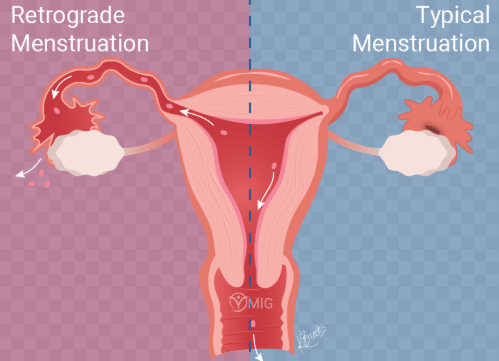
“I’ve always had quite painful periods, but I never really thought much of it — they were just painful. But now everything makes more sense. The doctors explained it could be linked to something called retrograde menstruation, where tissue grows outside the uterus. They ended up removing some of that tissue, which I didn’t even know was there. I feel lucky it was found when it was, before things got worse.”
Most people don’t have symptoms of retrograde menstruation; in those who do, it’s only more painful and lighter periods. It is common to experience some retrograde menstruation without even knowing it, as it isn’t a problem in itself. However, if it continues, it can lead to problems like endometriosis.
Common questions include:
- Do you still bleed with retrograde menstruation?
- Yes, you will still have blood flow out of the body vaginally. However, your period may be lighter as some blood flows to the pelvis.
- What happens to retrograde menstruation?
- Your body usually absorbs retrograde menstruation, meaning your immune system breaks down the blood and cells in your pelvis. However, sometimes endometrial tissue can attach outside the uterus, possibly causing pain or leading to endometriosis.
- What can I do to reduce my risk for retrograde menstruation?
- Retrograde menstruation is common and not well understood, so there isn’t much that can be done to prevent it. Hormone medications, like the pill or a hormonal IUD, can help lighten periods and may reduce retrograde menstruation if it causes pain.
 Girlhood 2 Grown
Leave a comment