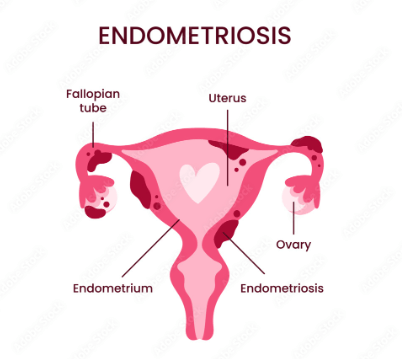
“Endometriosis occurs when cells similar to the ones in the lining of the womb (uterus) are found elsewhere in the body. These cells can grow and change in response to hormones in the menstrual cycle, this can cause inflammation, pain and scar tissue.
Endometriosis is most commonly found on the lining of the pelvis (peritoneum) and may occur in the ovaries and involve other pelvic organs, like the bowel or bladder. Less commonly, endometriosis can also be found outside the pelvis, such as in the chest.
Endometriosis affects 1 in 10 women and those assigned female at birth from puberty to menopause, although the impact may be felt for life. In the UK, that’s over 1.5 million from all races and ethnicities living with the condition.” (What is endometriosis? | Endometriosis UK)
When I was growing up, endometriosis was never talked about; I never even knew it existed. Only recently has this very real, very serious problem been brought into the light. I spoke to many women, each with a story just as bad as the next, about their experiences with endometritis and their advice regarding getting checked out.
I spoke to a very brave woman, Brooke Elliot, 21, who told me her story.
“I was 12 years old when I started my first period, and for the first year, I was irregular, which is completely normal. By the second year, everything started to become regular, which is when it all started going downhill. There were times when I would be rolling around the floor in agony and crying because the pain was too much for me to handle. My mam would call school and lie about me having appointments because I was in so much pain. The heavy periods, the big blood clots, it was a lot for a young girl to go through, but day in day out, I was told ‘this is normal’. 8 years later, it’s just getting worse and worse. I’ve been to multiple appointments, put on so many pills and was still told ‘this is a part of womanhood’, until April 2025. People think I’m being dramatic and it’s just a bad period, but it’s not; it’s a disease. This is not normal. You have to go to the doctors and stay there until they listen. You know your body better than anyone else. I brushed it under the carpet, after being told I was being over the top for so long, but I was right, and there was something wrong. If anyone wants to message me about advice or regarding going through a diagnosis, they can message me on Facebook.”
There are so many women like Brooke, living day by day in agony, being told they’re ‘dramatic’ or ‘over the top’. I spoke to Louise Taylor, 40, who has stage 4 endometriosis. She said, “I’ve had 9 surgeries, including a hysterectomy [womb removal], it’s now spread to my bowel, bladder and ribs.” Louise first went to her doctor at the age of 15 with symptoms of endometritis, but she wasn’t diagnosed until she was 34.
Endometriosis cannot be cured; however, there are treatments available to manage the symptoms. In worst cases, women have a hysterectomy or an oophorectomy, which is the removal of one or both ovaries. Brooke said, “There are tense machines out there that do help, but the main thing I do is ‘free bleed’ where I sit on the toilet for hours and just bleed, and that does help me a lot.” Other women also recommend hot water bottles for relief and painkillers, like co-codamol.
You know your body best. You can find more support here: Treatment and Management | Endometriosis UK
 Girlhood 2 Grown
Leave a comment